Author Archives: admin

A third of employees are not provided with hearing protection

Research conducted by Specsavers Corporate Eyecare has revealed that only 42% of employers in the UK provide overhead earmuffs to its employees.

Businesses of all sizes across the UK took part in a survey to find out what type of hearing protection is provided for them. It looked at the types of hearing protection offered by companies in the UK. The findings were:

  • Foam earplug 37%;
  • Custom moulded earplug 26%;
  • Ear canal caps 21%;
  • Flanged earplug 20%;
  • Integrated earmuff 18%;
  • Banded earplug 17%.

Under the Control of Noise at Work Regulations 2005, it is the responsibility of employers to protect their employees from exposure to excessive noise and noise-induced hearing loss.

Professions such as aircraft ground control and construction workers are examples of jobs where employees are in risk of hearing damage/loss, if relevant protection is not provided. Noise above 85db (decibels) can cause permanent and disabling hearing damage, which cannot be reversed.

At a construction site, peak noise levels can reach 120db, for example a chainsaw’s average decibel can reach 106db-115db, which can significantly damage a construction worker’s hearing or permanently cause them hearing loss.

Jim Lythgow, Director of Strategic Alliances at Specsavers Corporate Eyecare, expressed that “employers themselves acknowledge that they are not providing the necessary hearing protection, and by failing to do so, they may be putting their employees’ hearing at risk.”

Ensuring that hearing protection is highlighted in Risk Assessments could save companies from getting a hefty fine if they also carry out what is stated.

Jim Lythgow said: ‘It is good to see that at least some hearing protection is being offered. Employers may feel that what they have provided is adequate, but it is important that needs and risks are fully assessed so that the most appropriate type of hearing protection is made available.’

According to the HSE, between 2015 and 2018, 23,000 workers suffered work related hearing problems, and insurance claims for workplace noise-induced hearing loss in the UK has increased 189% over the last three years.

SHP

High-rise construction site workers “risking their lives” by ignoring evacuation alarms

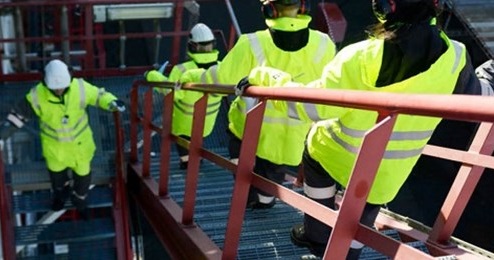
High-rise construction site workers aren’t treating evacuation alarms seriously enough and are “risking their lives” by not responding immediately, new research reveals today (Wednesday 4 September). 

Rather than head straight for the emergency exit, a third of workers who took part in evacuation trials spent more than a minute finishing a task, with the longest time to respond to an alarm being almost six minutes.

And once they completed their task, a quarter undertook four or more other activities, such as collecting tools, prior to starting to evacuate – decisions which can waste critical seconds in a real-life emergency.

Researchers from the University of Greenwich, funded by the Institution of Occupational Safety and Health (IOSH), also found that more than two in five needed their supervisors to instruct them to leave the site, while many believed their employers viewed it more important than they did to complete tasks before evacuating.

The research, called Construction site evacuation safety: evacuation strategies for tall construction sites, marks the first time the behaviour and performance of construction workers during an evacuation has been analysed. It comes as there are a huge number of high-rise buildings being constructed, with an estimated 541 planned in London alone in the coming years.

Two London construction sites took part in the research, with the aim of judging workers’ evacuation knowledge and seeing how emergency strategies can be improved by reviewing evacuation response times together with their walking and ascent/descent speeds.

In four full-scale unannounced evacuation trials, involving a total 932 workers, evacuation times from the buildings ranged from nine minutes, 14 seconds to 20 minutes, 47 seconds. These depended on the number of workers involved and what height they were at.

The researchers found that workers located within the formworks of a building respond to an alarm differently to those in the main building. The mean time to respond to an alarm for workers in the main building was 71 seconds while in the formworks it can be as low as 30 seconds. They found that 32 per cent of workers in the main building took more than a minute to “disengage from their pre-alarm activities”. In contrast, the average time for supervisors located in the formworks to disengage was only 5.9 seconds which, according to the report, was “an example of the performance of well-trained and highly-motivated staff”.

Responses to a questionnaire distributed among workers also highlighted some other concerns. While 82 per cent knew that an evacuation alarm meant they had to leave immediately, only 49 per cent said their first action is to do so. Four in five said they were prompted by an alarm, but video evidence taken during trial evacuations at the site suggested 43 per cent required supervisor intervention.

In their report, the researchers speculate that workers may not be reacting quickly enough because they aren’t clear what is meant by ‘evacuate immediately’. They recommend enhanced training and greater enforcement of evacuation policies to remedy this.

Professor Ed Galea, who headed up the research team in the Fire Safety Engineering Group at the University of Greenwich, said:

“In an emergency evacuation situation, each second can make the difference between life and death. A delayed response poses a significant risk to the health and safety of workers who might need to be evacuated due to a fire, or another on-site emergency.

“One unexpected finding was that workers were not impacted by construction height. This means that people on higher floors and those on lower floors had similar response times. A worker on the 30th floor did not necessary respond to an evacuation alarm any quicker than a worker on the fourth floor.

“This research shows that it is essential to have robust plans in place to ensure the safe and timely evacuation of workers, and it will aid the development of improved procedures and advance the safety of people working on high-rise construction sites.”

Duncan Spencer, Head of Advice and Practice at IOSH, said:

“The outcomes from the research will help to improve the safety of construction workers in emergency evacuation when operating in tall building construction environments, by providing a series of suggested improvements and recommendations to be followed by businesses.

“It is clear that these improvements are needed considering that this is one of the most challenging scenarios particularly given the ever-changing nature of the construction site. Response times are slow in many cases. Workers should be evacuating immediately when they hear an alarm, rather than wasting precious seconds on finishing a task. If they don’t do so, they are risking their lives because every second counts in an emergency.”

The trials took place at 22 and 100 Bishopsgate, both of which are being constructed by Multiplex. The firm has already moved to develop and enhance its safety processes.

Martin Wilshire, Multiplex Health and Safety Director, said:

“The research undertaken by Ed Galea and his team on our high-rise projects has highlighted the importance of challenging established industry ‘norms’ and their origins in creating relevant guidance around safety during tall building construction.

“From our involvement in this work, we have gained a greater understanding of evacuee behaviour and the impact of access constraints such as falsework and surfaces under construction which are unique to our industry. The detail in the research will better inform our approach to risk assessments, particularly in planning for means of escape and improving behaviours in an evacuation scenario.”

IOSH

HSE warns Total after workers exposed to dangerous gas

The UK’s health and safety watchdog has warned Total after workers on one of its North Sea platforms were exposed to a dangerous gas.

The incident took place in the shale shaker area of the Alwyn North platform in June, according to an inspector from the Health and Safety Executive (HSE).

A prohibition notice, which dictates that a specific activity is stopped immediately, was issued to Total.

Workers were exposed to hydrogen sulphide gas at detected levels up to 100 parts per million (ppm).

HSE says the gas is toxic at breathable concentrations between 500-1,000ppm, but death is not instantaneous.

At concentrations greater than 1,000ppm, the gas is rapidly lethal.

Energy Voice

Events co fined £161k over unsafe lifting operation injury

A Coventry-based company that manufacturers stands for exhibitions has been fined £161,000 after an employee was knocked unconscious and sustained a broken collar bone during the unsafe lift and move of a park home chassis.

Coventry Magistrates’ Court was told how employees at Sovereign Exhibitions and Events were moving the chassis, a frame that supports a small building such as a mobile home, through a doorway at the firm’s Woodcorner Farm site when the incident happened on 5 July 2018.

The frame was 4.27 m wide but the doorway it was being manoeuvred through was only 3.96 m wide. To angle the chassis through the narrow opening, employees had to tilt the sides of the frame, which was being manoeuvred by two forklift trucks, one at each end. While moving the frame, it slipped from the forks, rebounded off the floor and struck one of the employees on the shoulder. The force lifted him off his feet and flung him backwards 2 m into the building wall.

The Health and Safety Executive (HSE) investigation found the lift had not been properly planned, organised or carried out safely. Employees had been left to devise their own method of moving the chassis. The court was told that Sovereign Exhibitions & Events had failed to properly assess the risks and take simple measures to ensure the tasks was carried out safely.

Sovereign Exhibitions & Events of Units 1-3 Arley Industrial Park, Colliers Way, Arley, Coventry, West Midlands pleaded guilty to breaching s 2(1) of the Health and Safety at Work Act. The company must also pay £1,345 costs.

HSE inspector Christopher Maher said: “Those in control of work have a responsibility to devise safe methods of working and to provide the necessary information, instruction and training to their workers in the safe system of working.

“Since the incident, the company has widened the opening to allow for safe movement of the park home chassis.”

IOSH Magazine
HSE warning after vessel collides with North Sea platform

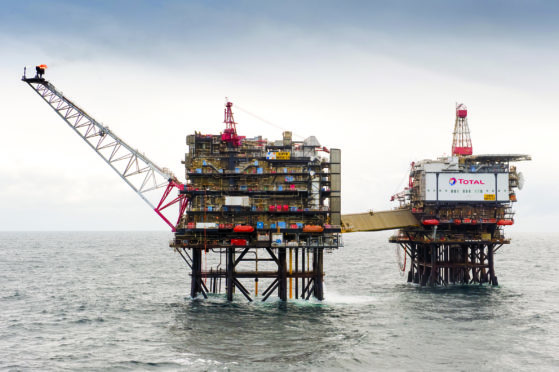
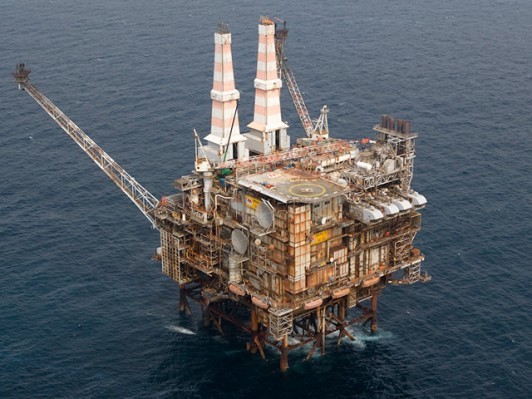
The Health and Safety Executive (HSE) has issued a safety notice over after a support vessel collided with an offshore platform in the North Sea.

The incident happened on June 6 at the Brae Alpha installation, when the Grampian Explorer ran into the platform causing damage to the ship and the rig.

The Grampian Explorer support vessel collided with the Brae Alpha platform on June 6.

No one was hurt, although HSE said it caused risk of injury to employees.

At the time Brae Alpha was operated by Marathon Oil, although it has since changed hands to RockRose Energy who completed a deal at the start of July to acquire the US firm’s North Sea assets.

As a result, the notice has been handed to RockRose Energy to make safety improvements.

It states that the vessel entered the platform’s 500 metre safe zone at a speed of up to six knots, which is 12 times the advised speed of 0.5 knots in marine industry guidelines.

The ship also did not adopt a “final set up position” to ensure operations were stable before moving alongside the Brae Alpha to begin work.

The notice states the operator of the platform failed to ensure the vessel was complying with the safety zone manoeuvring procedures.

As the new operator, RockRose has until December 20 to make the necessary changes.

Marathon Oil has been approached for comment.

A spokesman for RockRose Energy said: “RockRose is aware of the safety notice that was issued at the end of June, prior to RockRose taking over operatorship.

“We are working with the HSE to see what lessons can be learned and to ensure we maintain the highest safety standards at all times.”

RockRose recently acquired operatorship of the Brae field, around 170 miles north-east of Aberdeen, in its acquisition of Marathon Oil’s UK business which was completed in July.

However it was revealed last month that Taqa, a partner in the Greater Brae Area with a larger stake, has moved to oust RockRose as operator of the area.

It was appointed as a new operator in a vote with fellow partners, which needs to be approved by the Oil and Gas Authority before it is binding.

Although it won’t have financial consequences, RockRose said it could make future acquisitions “more complex and cumbersome” when trying to satisfy the OGA of its “capability to assume operatorship”.

Energy Voice

Concrete company fined after welder loses four fingers

A concrete production company has been fined £400,000 after a welder lost four fingers during an unsafe lifting operation.

On 27 September 2016, a welder from Hanson Quarry Products Europe Ltd, suffered injuries to his hand at the company’s Kings Cross site.

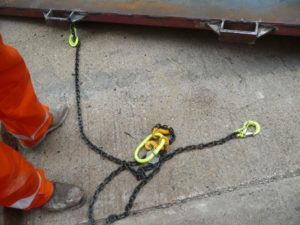
The injury was inflicted when a forklift that was being used to lift a large metal gate was attached to the truck by a chain, with an ‘O-ring’ slotted onto the forklift’s truck tines. As the gate was being lifted, it slipped off the tines and fell to the floor, slicing off the welder’s four fingers.

No precautions were taken to prevent it from sliding off.

The HSE’s investigation found that Hanson Quarry Products Europe Limited did not properly plan and supervise the lifting operation to ensure it was carried out in a safe manner.

At Southwark Crown Court, Hanson Quarry Products Europe Limited pleaded guilty to breaching Regulation 8(1) of the Lifting Operations and Lifting Equipment Regulations 1998 and has been fined £400,000 and ordered to pay full costs of £11,376.25.

HSE Inspector, Jane Wolfenden, stated that “the use of forklift truck, chain and O-ring was unsafe, putting workers at unnecessary risk. This incident could so easily have been avoided by simply having a competent person plan a safe lifting operation and providing adequate supervision to ensure the lifting operation was carried out safely.

“Companies should be aware that HSE will not hesitate to take appropriate enforcement action against those that fall below the required standards”.

SHP

Worker’s head and upper body horrifically crushed in poorly guarded machine

A Northampton-based engineering firm has been fined after an operator was crushed while making moulds for a casting machine.

The RSM Castings employee, who has asked to remain anonymous, sustained extensive injuries on 11 April 2018, including a broken neck, back fractures, broken ribs, a fractured shoulder blade, a ruptured spleen and torn liver, a punctured lung, facial fractures and loss of teeth. He has not yet been able to return to work due the severity of his injuries. 

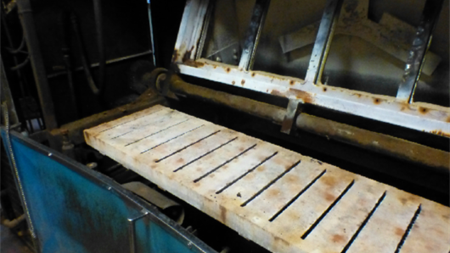
Northampton Magistrates’ Court was told that the worker leant into the machine to light the burners when the pattern plate closed on his head and upper body. The Health and Safety Executive (HSE) investigation found there was inadequate safeguarding on the piece of equipment to prevent access between the closing pattern parts.   

RSM Castings pleaded guilty to breaching s 11 of the Provision and Use of Work Equipment Regulations. It was been fined £32,000 and ordered to pay costs of £1,740. 

HSE inspector Neil Ward said: “This case highlights the importance of foundries checking guarding on their machines and not to be complacent about machinery safety. In this case RSM failed to ensure that the machine was guarded to the correct standard and it could have easily resulted in a fatal injury.” 

IOSH Magazine
UK government criticised over slow pace of remedial works after Grenfell

The UK government is “not doing enough” to remove and replace potentially dangerous cladding on high-rise residential buildings, MPs have warned.

In a report published yesterday, the Housing, Communities and Local Government (HCLG) Committee also accused the government of being “far too slow” to reform the building and fire safety regime, more than two years after the Grenfell Tower fire in west London.  

It said the initial urgency for safety reforms after 72 people were killed in the blaze in June 2017 “appears to have been lost” and progress with combustible cladding removal is “limited”. According to government figures from June, unsafe aluminium composite material (ACM), like that used to clad the Grenfell Tower, still remains on 327 high-rise residential and publicly owned buildings in England, which are unlikely to meet the building regulations. Just one building underwent rectification works that month.  

Ministers have committed £600m of funding to remove ACM cladding but not other potentially dangerous systems, such as high-pressure laminate (HPL) cladding, which are also combustible.  

Clive Betts MP, chair of the HCLG Committee, said: “Further delay is simply not acceptable. The government cannot morally justify funding the replacement of one form of dangerous cladding, but not others. It should immediately extend its fund to cover the removal and replacement of any form of combustible cladding – as defined by the government’s combustible cladding ban – from any high-rise or high-risk building.” 

The report cited evidence from Dr Jonathan Evans, chairman and chief executive of cladding supplier Ash & Lacy, who said: “There are only two grades of high-pressure laminates on the market: there is a fire-retardant grade and a standard grade. We now know that the fire-retardant grade failed this test with combustible insulation in 2014 […] The fire-retardant version of HPL failed more quickly than the fire-retardant version of ACM. If you extrapolate that, it is also possible for the standard-grade HPL, which contains 70% more combustible material.”  

The report recommended that the government “should set a realistic, but short, deadline by which time all buildings with any form of dangerous cladding should be fully remediated”. It added that “sanctions should follow for building owners who fail to make their buildings safe within a reasonable time frame”.  It also criticised the government’s lack of progress on updating the building and fire safety regulations. 

Adrian Dobson, executive director of the Royal Institute of British Architects, told the committee that nothing significant, other than the combustible cladding ban, had changed in the building regulations since June 2017. 

“We have had one helpful change, which is the restriction on combustible materials, but other than that the regulatory regime and the regulations remain absolutely the same. We presumably have not only unsafe buildings out there, but we are potentially still constructing unsafe buildings, he said.” 

Betts said: “Much more progress should have been made on developing a comprehensive building and fire safety framework. This is simply not good enough. It has been over two years since the fire at Grenfell Tower, and more than a year since the publication of the Final Report of the Independent Review of Building Regulations and Fire Safety, and yet the government has only just published a consultation into its proposals for reform of the building safety regulatory system. The government must pick up the pace of reform, before it is too late.”

IOSH Magazine
Conference to focus on health and safety issues affecting food and drink manufacturing

Delegates hear from a speaker at last year’s conference

Combatting modern slavery, the use of new technology and preventing health problems will be among key topics at a leading food and drink industry event.

The Food and Drink Manufacturing Health and Safety Conference will also hear real-life stories as speakers share the challenges they have faced in ensuring employees aren’t injured or become ill at work and how they have overcome them.

These speakers will include Chris Moon, who will recount his experience of being held prisoner by the Khmer Rouge terror group in Cambodia and lost and arm and leg in an explosion in East Africa.

The annual conference is organised by the Food and Drink Industries Group of the Institution of Occupational Safety and Health (IOSH), in conjunction with the Food and Drink Manufacture Health and Safety Forum.

Delegates will hear from Mark Heath, Deputy Director of Business Change at the Gangmasters and Labour Abuse Authority, who will provide an update on their work to tackle the exploitation of working people.

Clare Forshaw, Occupational Health and Hygiene Partner at Park Health and Safety, will review common health problems faced by employees and how they can be managed, while Ben Bennett, Managing Director of Luminous Group, will explore how technology can enhance health and safety training.

Meanwhile, IOSH’s Director of Strategy and Business Development Richard Orton will examine ‘the safe and healthy route to going global’ and Dr John Rowe, Head of Manufacturing and Utilities at the Health and Safety Executive, will discuss their strategy for the next decade.

Neil Catton, chair of the working party which organises the conference and member of the IOSH group, will reflect on his own personal story about the value of health and safety.
He said: “We know businesses are faced with a multitude of health and safety risks and that new ones are emerging all of time. For example, new technology is both a risk but also an opportunity, while it is crucial organisations ensure good practice is followed right through their supply chains.

“Managing these health and safety risks successfully can be the key to an enhanced reputation and increased profitability. What business wouldn’t want that?

“Our conference will focus on the major health and safety issues affecting the food and drink manufacturing industry at the moment. Delegates will leave the event armed with key updates and information which can readily be transferred to their own business.”

The conference will also see the presentation of the annual Food and Drink Health and Safety Awards.

It is being held at the DoubleTree by Hilton Hotel in Broughton, on 1-2 October.

IOSH Magazine
Property firm fined £1.3m after pedestrian fatally hit by tank cover during storm

A property management firm has been fined £1.3m after a woman was fatally struck by a large wooden panel that blew off a redundant water tank during a storm in 2017. 

Tahnie Martin, 29, was hit by the panel outside Wolverhampton’s Mander shopping centre on Dudley Street on 23 February. 

 International building management company Cushman and Wakefield Debenham Tie Leung had been the managing agent for the building since September 2012. The disused water tank housing that the panel came from had not been inspected or maintained at all during that period. William Humphries, health and safety enforcement lead at the City of Wolverhampton Council, which brought the prosecution, said: “This was despite the structure being visible from the window of their offices [and] from the carpark.”  

Cushman and Wakefield had pleaded guilty at an earlier hearing to breaching s 3(1) of the Health and Safety at Work Act and was last week fined plus ordered to pay costs of £375,000.  As part of the investigation, the council commissioned an expert to examine the water tank and cover, who found that the panel had blown away because of the lack of maintenance which had resulted from wet rot and corroded defective fixings.  In addition, despite it being the “industry norm” to paint exposed softwood every three years to prevent it rotting, a forensic paint expert confirmed the wooden fixing pads had not been painted for 20 years.   

Humphries said: “Although there was a storm that day, this was not a freak accident. Tahnie’s death was due to the lack of maintenance of this building […] This could have so easily been an investigation into multiple fatalities.”  According to the judge’s sentencing remarks, the heavy wooden panel and other large wooden items “were simply blown away” in 59 mph winds as the parts intended to secure them to a brick structure on top of the plant room roof were “entirely” rotten and corroded.   

Mrs Justice Carr said: “A long section of plinth which should have been securing the water tank cover was found flapping in the wind. It fitted along one edge of the panel that had struck Ms Martin. The wooden cover should have been secured by a hasp and staple arrangement, with the staple screwed to a fixing pad secured to the brickwork below, with the hasp passing over it. A nut and bolt would then pass through the exposed staple to secure the arrangement.  “However, the hasps and staples were corroded and the supporting timber was visibly rotten. Some pads crumbled to the touch. In some cases, the staple had simply pulled out of the rotten pad, removing the wood with it. In other cases, one or more metal components remained. “The wooden cover on the ventilation duct had flown a significant distance. It should have been secured to a wooden sill secured to the brickwork below. However, the wooden sill was rotten and the metal fixings corroded.” 

After the incident Cushman and Wakefield set up a working group to ensure that risks arising from structures such as those on the plant room roof could not be missed in future. It developed new working procedures, improved its quality management system and made repairs to the building itself.  When setting the level of fine, the judge determined that culpability was medium, the seriousness of harm risked was level A, and the likelihood of it arising was medium. The offence therefore fell into harm category 2 before it was moved up to harm category 1 to reflect the large number of people who were exposed to the risk of harm. (CCTV footage showed that five minutes before the accident 88 adults, three teenagers and ten children passed by.) 

The judge set a starting point of £2.5m because she said Cushman and Wakefield fell into the “large organisation” turnover range. This was reduced to £1.3m upon recognition of its good health and safety record, cooperation with the investigation, remedial action and early guilty plea.

IOSH Magazine