AIRWORLD AIRLINES Ltd has been fined £82,000 after a freight container weighing nearly 700kg fell on a worker at a warehouse in Hounslow
Westminster Magistrates Court
Westminster Magistrates’ Court heard how, on 26 January 2018, a warehouse cargo agent was using a forklift truck to offload a freight container from a heavy goods vehicle at the site on the Hatton Cross Centre. The container became unstable and fell on him. As a result, he was pinned between the container and a concrete pedestrian barrier, sustaining serious injuries including multiple fractures and internal injuries.
An investigation by the Health and Safety Executive (HSE) found the company had no safe system of work in place to identify the risk of freight containers falling from forklift truck blades. The company had also made alterations to the fork lift blades to enable employees to lift aircraft containers from the floor without any stabilisation mechanism.
District Judge Baraitser described Airworld Airlines Ltd’s lifting operation as a “dangerous practice [which] presented a significant risk not only to the operator of the forklift but to any member of staff who happened to be in the vicinity of the operation as it was being carried out.”
Airworld Airlines Ltd of Ascot, Berkshire pleaded guilty to breaching Section 2(1) of the Health and Safety at Work etc. Act 1974. The company was fined £82,000 and ordered to pay £6575.60 costs and £170.00 victim surcharge.
Speaking after the hearing, HSE inspector Sarah Pearce said, “Employers have a responsibility to devise safe methods of carrying out lifting operations and should ensure that every lifting operation is properly planned, appropriately supervised and carried out in a safe manner.
“Companies should be aware that HSE will not hesitate to take appropriate enforcement action against those that fall below the required standards.”
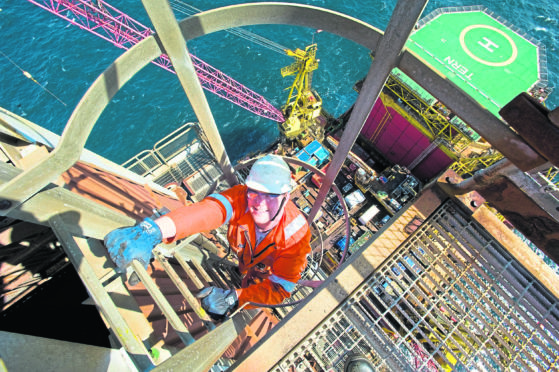
North Sea oil companies have grasped the need to “reconnect” teams on the “beach” with those offshore, a health and safety chief has said.
Chris Flint, energy director at the Health and Safety Executive (HSE), said trips offshore by senior leaders can’t just be a case of “putting in an appearance”.
They have to ask the right questions to know for sure that the platforms are safe, said Mr Flint.
The safety boss also said the entry of newer operators to the North Sea was generally positive, because assets will get more investment.
Asked whether he was concerned about newcomers lacking the experience to operate safely, Mr Flint said: “We engage with the new operator quite early to get a feel for the nature of the business.
“We need to be confident they’ve got a capable workforce, from senior leadership to people at the sharp end. We’re very alive to that and if we spot an issue, we would intervene. It’s one to keep an eye on, but as long as the new owners bring experienced people across, we do not see it as a negative.”
Mr Flint’s conversations with the workforce suggest that bosses at new entrants have “more visibility offshore than perhaps some of the majors had in the past”.
Partly, that’s because the new owners have fewer platforms to visit. Also, if they’ve just bought the installations, it’s only natural they’d be keen see them.
But Mr Flint is convinced of a “definite need to reconnect the beach and offshore in a stronger way than perhaps is always the case in oil companies”.
He said: “We’ve made that point and I think industry is responding. Everyone recognises the need for those things to be connected if we’re going to improve safety matters.
“It can’t just be a token effort. It’s about asking the right questions to get assurance that those assets are being run safely.
“If we can reconnect the beach and offshore in the right way, that should have a positive impact.”
He added: “There are onshore and offshore elements to our inspections. We sometimes find that the picture a company’s onshore leadership team paints of their operations doesn’t always reflect what we find when we go offshore. It could be that they know the truth and are giving us a rosier picture, but it may also be reflecting what they have been told, which doesn’t reflect the reality offshore.”
Chris Flint, director of HSE’s energy division
HSE is also “alive” to concerns about skills shortages and the potential impact on safety.
He said: “If there was a ramp up in activity, there would be a challenge. We would have to respond, but we’ve not seen the sort of pick-up that would cause that. If we did, we would have to respond.
“If we saw there was insufficient capacity and capability in terms of the skills, knowledge and experience out there to operate assets safely, then we would have to take action, which might, in some cases, mean closing the installation down.”
Mr Flint fired a shot across the North Sea industry’s bow last year when, in a strongly-worded letter, he told operators to explain how they would reduce hydrocarbon releases (HCRs).
While welcoming a general downward trend in the number of HCRs, he warned there had been several major leaks that had come “perilously close to disaster” recently.
Mr Flint seems to be encouraged by the overall response from the industry. He already had a fairly good idea of the areas industry would need to address, around leadership, assurance activity, asset integrity, workforce engagement, and monitoring and review processes.
If you have not got those components right, you won’t spot weaknesses you need to address, he said.
Operators were asked to compare themselves to the Energy Institute’s 20-element process safety management standard, which is useful for identifying areas of improvement.
Not all of the operators were as thorough as they might have been, so it was a case of going back to them and drawing more detail out.
He said: “We got some really good responses from a few and some less than adequate ones from another few. And then there was a big area in the middle where we had to go back and verify what was being said and have a look at their internal actions to be confident they were responding in the right way.
“It’s fair to say there was quite a bit of work for a number of operators to do to improve matters. That does not mean people are not trying and don’t have plans, but we needed to verify a few things and make sure people are going in the right direction.
“Clearly, those that gave a less than adequate response got a little bit more attention than the others. Our inspection agenda focuses on those operators who we have less confidence in, but we’re speaking to all of them.”
Oil and Gas UK and Step Change in Safety stepped in and are working on an “action plan”, which is “more or less agreed”.
The plan could be expected to touch on the sharing of good practice and learning, while addressing assurance, verification, the safe reinstatement of plant, as well as management of change.
Then it’s down to industry to deliver, with HSE’s support.
Construction deaths have fallen to their lowest level on record.
Latest statistics from the Health and Safety Executive show 30 construction workers were killed in 2018/19.
The figure is down on the annual five-year average of 36 and the lowest since modern records begun back in 1981.
Construction is still responsible as a sector for the second highest number of deaths behind agriculture,forestry and fishing.
The fatal injury rate in construction also fell to 1.31 per 100,000 workers which is four times higher than the average rate across all industries.
HSE Chair Martin Temple said: “Today’s release of workplace fatality statistics is a reminder that despite the UK’s world leading position in health and safety, we cannot become complacent as we seek to fulfil our mission in preventing injury, ill health and death at work.”
AN ELECTRICAL company has been fined after a woman was fatally crushed by a roller shutter door.
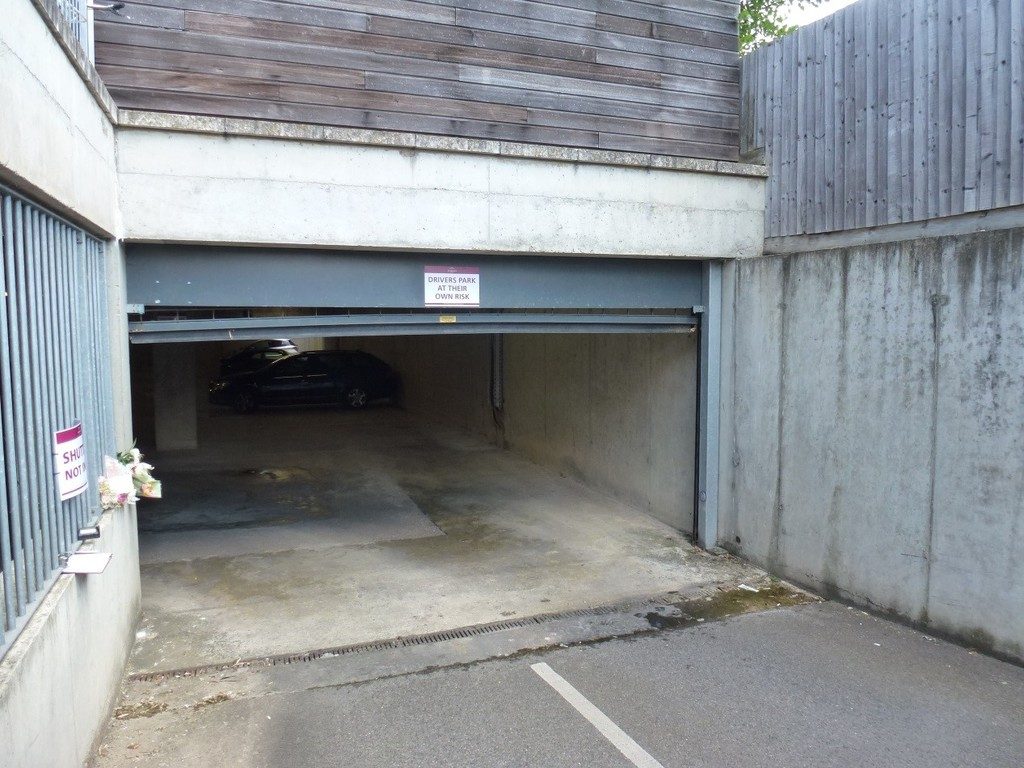
Peterborough Magistrates’ Court heard how on 14 August 2016 Heidi Chalkley pressed the button to open the roller-shutter door at Ruth Bagnall Court, Cambridge. She then held onto the grille as it raised and became trapped as it wound around the roller, fatally crushing her body.
An investigation by the Health and Safety Executive (HSE) found that the sensors at the top of the door were incorrectly wired and no longer functioned as the door opened.
B.S. Graves (Electrical) Limited had carried out work on the roller shutter door since 2012, including an inspection only a month before the incident. The company did not check the operation of the safety sensors and failed to identify the fault.
B.S. Graves (Electrical) Limited of Rushmere Close, Ramsey, Cambridgeshire pleaded guilty to breaching Section 3(1) of Health & Safety at Work etc Act 1974 and was fined £25,000 and ordered to pay costs of £6,500.
Speaking after the hearing, HSE inspector Graeme Warden commented: “This tragic and distressing incident has had an untold impact on all those who knew Heidi. It could have been avoided if the company had ensured employees were suitably trained to inspect the doors and the functioning of the safety sensors.”
Terex GB fined after worker pinned by mobile crushing plant
The UK arm of a US manufacturing company has been fined £150,000 over the death of a worker after an accident at its site in Omagh, Northern Ireland.
Terex GB employee Steven McTeague, 51, died on 14 July 2016, three days after he was trapped between two stone crushing machines at the Cookstown Road factory.
The company had been accused of corporate manslaughter but, BBC News reported, the charge was “left on the books” after its director, Paul MacDonnell, pleaded guilty on behalf of Terex GB to three offences under health and safety legislation.
Dungannon Court was told that McTeague had been using a handheld controller to move one of the concrete jaw crushers, which was parked in the stockyard. However, the crusher toppled on to another machine, trapping him. He sustained fatal crush injuries to his chest. Another worker was also injured.
Kyle Carrick, an inspector at the Health and Safety Executive for Northern Ireland (HSENI), said after the trial: “Steven’s tragic death could easily have been avoided if his employer had properly considered the risks associated with the movement of mobile plant within the stockyard. “Careful consideration as to the layout of the stockyard would have gone some way to preventing this tragic incident. “Manoeuvring mobile plant using handheld controllers poses significant risks if operators cannot safely maintain good separation distances during the movement of such equipment.”
Terex GB pleaded guilty to breaching Art 4(1) of the Health and Safety at Work (Northern Ireland) Order, Art 5(1) of the Health and Safety at Work (Northern Ireland) Order, and reg 3(1)(a) of the Management of Health and Safety at Work Regulations (NI). Judge Stephen Fowler QC imposed a £50,000 penalty for each offence.
According to BBC News, the judge said the company’s usual responsible attitude to safety and health “did not come up to [its] usual high standards” in this case. Accounts filed for Terex GB, which makes equipment for concrete crushing and screening and roadworks, show turnover of £320m in the year ending 31 December 2017.
Britain’s workplace health and safety regulator has announced the appointment of its new Chief Executive.
The Health and Safety Executive (HSE) has revealed the current Inspector General and Chief Executive of the Insolvency Service, Sarah Albon will join the organisation on 1 September.
HSE new CEO Sarah Albon
Ms Albon joined The Insolvency Service in February 2015, implementing its strategy to improve service to its customers, lower its costs, and further strengthen the UK’s insolvency regime.
She will be replacing outgoing Acting Chief Executive David Snowball who has held the post since June 2018 and will be retiring from HSE at the end of the year.
Sarah said: “I am honoured to have the opportunity to lead the executive of this important and hugely respected regulator. Working together with my new colleagues across HSE, I’m looking forward to getting to grips with the vital mission we deliver on behalf of Great Britain’s workplaces. My focus will be on continuing to deliver improvements in health and safety performance as our workplaces move into a future with new challenges, new technologies and new opportunities.”
Sarah’s previous roles in Government include, Director of Strategy and Change at Her Majesty’s Courts and Tribunal Service, Director of Civil Family and Legal Aid Policy at the Ministry of Justice, Deputy Director of Criminal Legal Aid Strategy, Ministry of Justice and has also served as principal private secretary to two Lord Chancellors.
Martin Temple, HSE’s Chair welcomed the appointment: “I am delighted to welcome Sarah Albon to HSE as our new chief executive and look forward enormously to working with her.
“Sarah’s CV speaks for itself and her valuable experience in leading organisations through change and planning for the future will stand her in good stead leading this world-class regulator of workplace health and safety.”
The appointment was made following an open recruitment process.
HSE is an Executive Non-Departmental Public Body sponsored by the Department for Work and Pensions (DWP).
A grain storage company has been fined £180,000 following the death of a worker.
Edward Orlopp, who was a site manager at Camgrain Stores’ site in Linton, Cambridgeshire, died after being hit by a lorry.
The company pleaded guilty to breaching s 2(1) of the Health and Safety at Work Act and was fined at Peterborough Crown Court on Wednesday. It was also ordered to pay costs of £20,000. The court was told that on 27 July 2016 Orlopp walked out of the control room and in front of the moving vehicle.
The Health and Safety Executive (HSE) said despite checking his mirrors the driver did not see Orlopp. Its investigation found that Camgrain Stores – a farming co-operative that handles wheat, barley and other crops at four sites – had failed to ensure that pedestrians and vehicles could move safely around the site. It had not provided measures to prevent employees walking into areas where large vehicles were operating.
Inspector Stephen Faulkner said after the hearing: “Being struck by vehicles is one of the most common causes of workplace fatal accidents. This was a tragic and wholly unavoidable incident caused by failure of the host company to undertake a number of simple measures.”
Safety technology can revolutionise the workplace but there are pitfalls to watch out for.
These are exciting times to be working in safety. Technology to keep people healthy and safe at work has changed little in decades, but the Digital Revolution, powered by the internet of things (IoT), will herald unparalleled opportunities for OSH and enable real-time measurement and insight in ways previously unimaginable. But do we truly understand the issues that this technology could raise, and have we considered how to introduce them in ways that engage workers and provide a clear benefit to them?
IoT sensors supported by artificial intelligence (AI) will transform safety products such as personal protective equipment (PPE), workwear and alarms into “connected assets” with in-built sensors. These sensors can monitor everything from safety alarms, weather and site traffic to the location and wellbeing of workers. The power of this technology is realised when assets are connected to protect people in real time and data is created, enabling more precise measurement and deeper learning. Six ways that IoT technologies could improve OSH are shown below.
Organisations already use global positioning system (GPS) signals to locate their staff and business travellers at any time. IoT technology will take this concept to a new level, enabling work on complex sites with busy traffic to be better controlled.
Around 50 people are killed and more than 5,000 are hurt each year in accidents involving moving vehicles and objects. Traffic interaction on hectic worksites is currently controlled using independent and often manual measures, such as segregation, signage, banksmen, speed limits and PPE. IoT sensors within smart PPE, vehicles and assets will enable these safety controls to function as one interconnected system. Geofencing can also be used to create virtual geographic boundaries, alerting the sensors in wearables when the individual enters the zone. This could transform worker situational awareness by warning them in real time if they enter a danger zone or the path of a moving vehicle, and automatically isolating equipment if hazardous conditions arise.
The technology also raises implications we need to consider. Every practitioner knows the importance of consulting employees so we will have to engage with the workforce, answer their concerns and provide options. At a more profound level, we need to consider how this technology shapes employees’ perceptions of control and autonomy, which are known factors affecting stress and mental health. Thought will also have to be given to workers’ concerns about how the data could be misused.
Augmented reality within head-mounted displays enables workers to overlay contextually relevant information, such as plans, into their immediate line of sight. Workers can also communicate directly with others using in-built cameras to share images. Many of the headsets incorporate voice-control systems, called hearables, enabling workers to call up instructions using speech recognition and complete checklists using verbal commands. Employers will need to consider the risk of eavesdropping and how permissions for voice recording are obtained.
Wearables measure a range of body dimensions and provide unparalleled ways to monitor an individual’s physical status and warn when conditions become dangerous. Measuring a worker’s actual exposure in real time to chemicals, noise and heat can be augmented with body monitoring to assess the impacts. The capabilities of today’s wearable devices have improved significantly, and the latest ones can measure oxygen saturation rates and monitor for atrial fibrillation (a condition that causes an irregular and often abnormally fast heart rate). Improvements in the range of data gathered and the capability of analytics could transform our understanding of health and wellbeing.
Wearables open new ways to manage exposure levels. Such insight can be used to change the type of work, potentially altering exposure periods and shift patterns or making physical changes to the work set-up to improve safety. This type of information will establish a real-time feedback loop helping us to learn from “work as done”. It’s not solely about improving occupational exposures, however; wearables are already improving employee’s participation and engagement with health and wellness programmes.
Privacy considerations
Given how much personal health data wearables will collect, organisations will need to consider their legal obligations on the holding of medical records as well as privacy legislation such as the EU general data protection regulation (GDPR) and, in the US, the Health Insurance Portability and Accountability Act of 1996 (see “Considerations for employers”, right).
They will also need to consider how they use, retain and potentially share the wealth of data they obtain, satisfying themselves that their third-party providers have measures to securely manage the data they access or gather. Other considerations centre on how data will be retained, decommissioned and deleted, in compliance with the six principles of GDPR and, given some of this data could be construed as occupational health records, with the obligation for long-term retention. Employers will need to build trust early with their workforce through dialogue and transparency about what they intend to do with the data gathered.
Organisations also need to be clear about when a wearable is desirable or mandatory. For wearables that are used as a formal monitoring technique of a workplace hazard, it is likely that their use would be deemed mandatory and that might trigger formal consultative processes and possible inclusion in employment contracts.
Just and fair investigations
Other considerations that employers should plan for are how the data will be used post-incident and how it fits with the “just and fair” approach to investigations. Armed with IoT data from wearables, hearables and tracking devices, investigators will have their own “black box” of information and may know more about an incident than the victim can recall. Such information could transform how investigations are conducted, and OSH managers would be wise to plan for this.
The technology has significant potential to improve how we manage OSH risks, but this can be realised only if we recognise that workers are key to making it a success. Ultimately, they have the most to gain from the introduction of IoT safety devices because they are the ones who are being injured, partly as a result of the limitations of current technology.
Workers also have the greatest knowledge of how work is conducted and will be able to identify where this technology could have its maximum impact. Early engagement and transparency on data management will be essential to build trust and support for safety technology.
High risk sectors where workers are exposed to a range of different dusts that are linked to respiratory diseases are being targeted in a new inspection crackdown.
HSE Inspectors
The Health and Safety Executive (HSE) announced the new round of dust control inspections on 11 June, which will take place over the next few weeks. HSE inspectors will concentrate on industries such as construction, woodworking and food manufacturing where occupational lung diseases, including in some cases occupational cancers, are more common.
Inspectors will look to see what measures employers have been put in place to protect workers’ lungs from the likes of asbestos, silica, wood and flour dust. Businesses will need to show that they have worked with employees to highlight the risks, plan work properly and put in place the right controls. Where necessary, the HSE says it will use enforcement to make sure employees are protected.
“Exposure to asbestos, silica, wood, flour and other dust can have life-changing consequences,” said Professor David Fishwick, HSE’s chief medical officer.
“Each year work-related lung diseases linked to past exposures are estimated to kill 12,000 workers across Great Britain. In many cases these diseases take a long time to develop after exposure, so the damage done may not be immediately obvious. Others, such as occupational asthma and acute silicosis, can occur more quickly.”
Fishwick added: “These conditions can and do have a significant impact on both the individuals affected and those closest to them, so it is imperative that workers take the necessary precautions to protect their lungs.”
Sarah Jardine, HSE’s chief inspector of construction, said: “We are carrying out this series of inspections to ensure businesses are fulfilling their legal duties to protect workers from harm. This includes controlling the levels of dust in workplaces.
“We want to ensure employers and their workers are aware of the risks associated with any task that produces dust. Such work needs to be properly planned and use the right controls, such as water suppression, extraction and masks.”
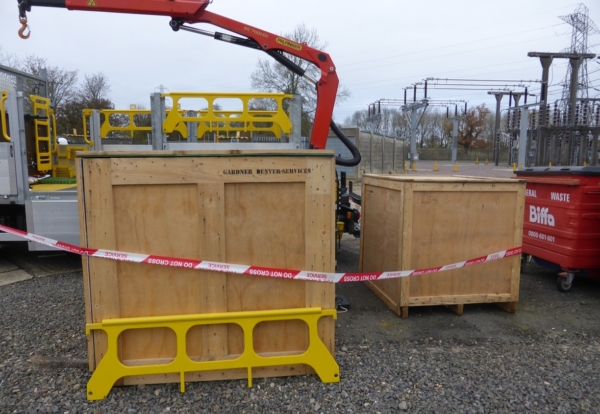
Aylesbury Crown Court heard how, on 18 November 2016, Paul Marsden, a sub-station crafts person for National Grid Electricity Transmission was to move a delivery crate containing a compressor with the help of a colleague.
Marsden was using a remote-controlled lorry loader crane but as they attempted to attach the slings to the hook, the crane struck him resulting in fatal injuries at the East Claydon site.
An HSE investigation found National Grid Electricity Transmission PLC failed to ensure the lift was properly planned, effectively supervised and carried out safely.
The company also failed to ensure Marsden had received adequate training in the new lorry loader crane, in particular the additional risks due to the remote-control unit.
National Grid Electricity Transmission PLC pleaded guilty to breaching lifting regulations and was fined £334,000 and ordered to pay costs of £17 673.34 costs, as well as an additional victim surcharge of £170.
HSE inspector Stephen Faulkner, speaking after the sentencing said: “This tragic incident could have been avoided if the company had properly planned the movement of the crate involved.
“Employers must recognise operating remote-controlled plants carry their own risks and should be managed appropriately, including through providing adequate training for employees.”
“Companies should be aware that HSE will not hesitate to take appropriate enforcement action against those that fall below the required standards.”